I cannot believe it’s been a week since I crossed the finish line of the 2026 Boston Marathon! Don’t worry – there WILL be a race weekend vlog coming soon, but for those of you that want the play by play of how race day went (and are longing for far more detail than I could ever cover in a YouTube video), buckle in…
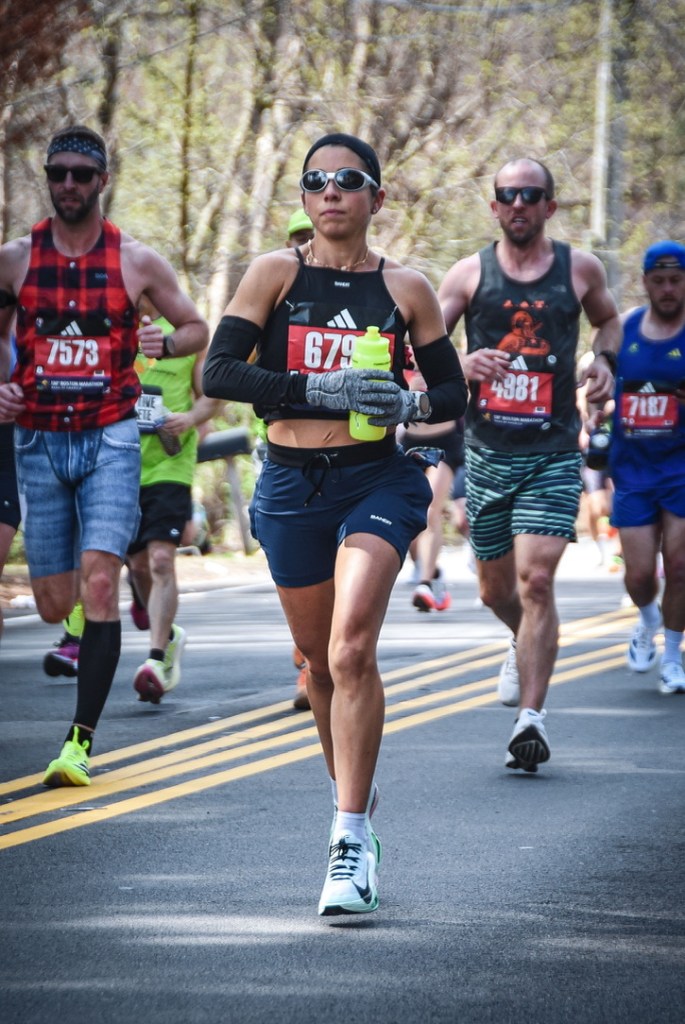
So right now, I am riding the highs of completing the race just a few days ago, and counting down the days for when I can do it all over again next year. But, the reality is, when Boston Marathon sign up comes around, it’s usually in the toughest point of my Fall Marathon training in the middle of the unrelenting South Florida summer. I’m typically less than enthused to be signing myself up for yet another race – I have to get through my Fall one first! And I always seem to reflect back on how hard the Boston course is, how the downhills always destroy me, and how I’ve never seemed to quite be able to get the nutrition right on race day (more on that later).
But, whether it’s peer pressure from my running friends all doing Boston, or the desire to want to keep training when the Florida weather will actually be gorgeous (in the winter… yay Spring races!) and I know that summer will (hopefully) eventually end, I, one way or another, inevitably enroll myself in the Boston Marathon. And don’t get me wrong, I LOVE the race, and this past year was my fifth time in a row completing it; however, the registration timing always leaves me a bit perplexed as to why I end up signing up for this thing year after year. Yet, I think there are moments for every runner where we deeply question why we do what we do, and it’s our commitment to the sport, to challenging our bodies, and to being smart about when to rest and when to persevere that makes us, overall, love running and everything it stands for far more than being annoyed at having to run through yet another sticky, swampy 20 miler.
That being said, I am currently at the point in my post-Boston high where I am enthusiastically looking forward to training for another Fall race, even if that means the weather conditions of my runs equate more to swimming in a sauna than actual marathon training! But, before I look ahead at all of the months of training and share what my plan moving forward will be for my Fall race, it’s time to properly reflect on how this training cycle for the 2026 Boston Marathon went as a whole, and how the race turned out for me.
training
Overall, I felt that my training cycle for the 2026 Boston Marathon was very, very strong and I was the fittest I’ve ever been. If you followed along on Strava, you saw that within my first four weeks of training, I ran a 10K PR of 37:30, and it seemed like things only got better from there. I was able to consistently hold very high mileage (several weeks in the 85-90 mile range, with doubles), hit paces for most of my workouts, and felt quite strong overall. I incorporated strength training into my build, as usual, and timed it so that my lifts were on workout days and long run days, so that I could properly recover on my rest days. In terms of the plan I followed, I loosely based it off of a combination of Pfitzinger’s Advanced Marathoning 18/85 plan and Jack Daniels’ 2Q plan (you can watch the full YouTube video of me breaking down how I combine them here).
Given all of my training and how I felt during the Chicago Marathon, where I ran a 2:55 with a slight cold and a seized up hamstring, I felt that 2:55 would be a very reasonable goal for the trickier, more challenging Boston Marathon course. My biggest struggle with this year’s race (and the same challenge I encounter every year, yet always avoid training for) was the downhill nature of the course. I didn’t really practice any downhill running in training and barely focused on hills this year, thinking that “the Florida heat and humidity would even out the hills encountered in Boston”. Wrong. But we’ll get into that later.
pre-race
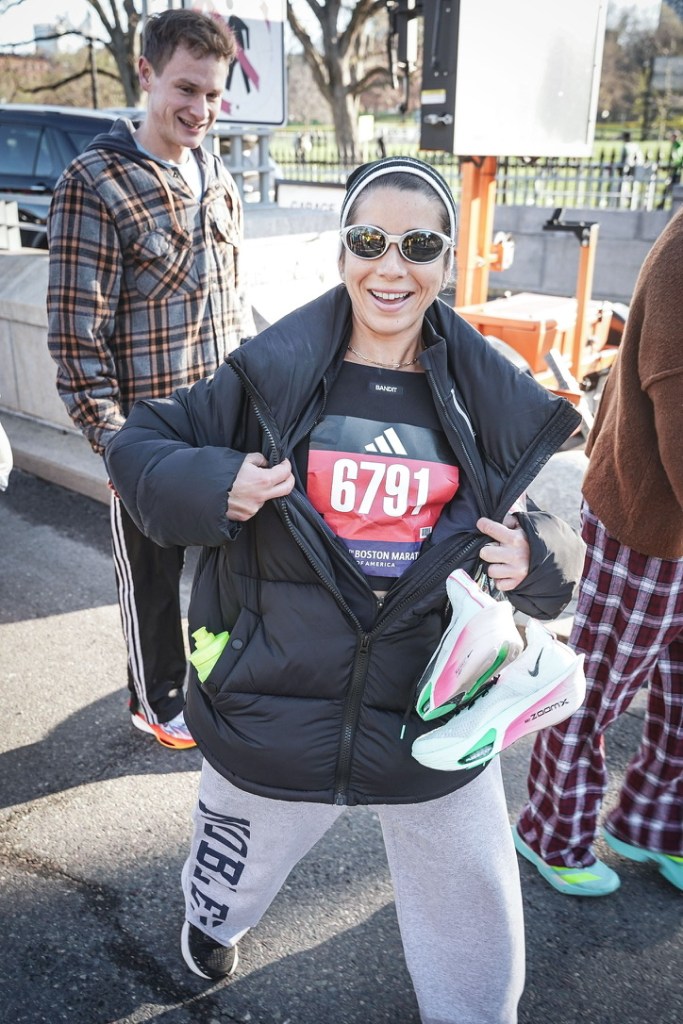
On race morning, I woke up early to try and beeline it to the bus loading area in the Boston Commons by 6:45 A.M. From past experience, I knew that you didn’t have to quiteeee be at the buses exactly at that time, particularly as a Wave 1 runner. Last year, I arrived a few minutes shy of the bus loading time and was able to walk right on, so I figured this year would be the same. That’s why when I woke up on race day morning at 5 AM to drink my typical morning coffee with oat milk, I paused for a significant amount of time when I realized that the hotel mini fridge had kept neither my oat milk nor my almond milk anywhere near a refrigerator-safe temperature (both were downright lukewarm). Since I usually only have a small amount of oat milk with my coffee, I figured it would be fine, but I decided to pass on the almond milk, spending roughly twenty precious race-day morning minutes trying to acquire some from the hotel kitchen. By the time I was able to add the almond milk to my pre-race Cheerios bowl, I had already gone to the bathroom a couple of times and figured my GI system was all clear for race day!
As usual, I was running late, chaotically filming my race-day vlog and trying not to wake up my sleeping fiancé as he intermittently commanded me to shut off a distant, near-nonexistent light in his early morning slumber. He did eventually wake up though, and kindly walked me to the bus loading area so I wouldn’t have to walk alone from the hotel, which we left right at 6:45. The bus loading ended up being the most disorganized it’s ever been, and my 7:00 A.M. arrival made matters so much worse as we all waited in line for over an hour to board the buses. By the time we got to the start village, I barely had time to use the porta-potty, quickly eat my Clif Bar, and then head over to the corrals for my start wave.
After doing a light jog to the corral porta-potty and peeing two more times before doing my dynamic warmup routine, I determined that today was going to be my day: my body felt awesome: carbed up, loose, and I didn’t feel overly puffy or stuffed as I normally do on race morning and three days before the beginning of my period (historically the worst for my performance). I took a couple of puffs of my inhaler, soaked in the incredible weather we were blessed with on race morning (48ish degrees Fahrenheit at the start!), and headed out to my starting corral to begin the 2026 Boston Marathon!
So, one thing that’s particularly tricky about training in Florida is that it’s extremely difficult to do long runs at the usual Boston Marathon start time because it gets so insanely hot and humid here starting at around 8:00 AM. While I tell myself every year that I will sacrifice one long run so I can practice my Boston race-day nutrition timing, I never actually end up doing it, since I’m way too eager to get my runs done before 10:00 AM so I can get on with the rest of my life (and try to not melt). However, the Boston Marathon starts at 10:00 AM – and that’s if you’re in the fastest wave! So in order to ensure that your glycogen stores are all topped off and that you have enough fuel to get you through the race, typically what people do (if they’re taking the bus, at least) is to eat a bigger race day breakfast at their hotel four to five hours before the race, and then consume a small snack about 60-90 minutes before the gun time. Like I said, I can’t exactly practice all that in Florida, since running past 9:00 AM here is about as enjoyable as sitting in a sauna showering boiling water from the ceiling. What I typically do instead is practice consuming a larger breakfast (in my case, my Honey Nut Cheerios with almond milk and a banana) for my long runs and smaller snacks before my other early morning (but not quite as long) runs. For example, during training, I will eat Honey Nut Cheerios before a twenty mile marathon pace workout, and on a separate day, I will eat a Clif Bar before a 90 minute easy run. I never really get the opportunity to try the two together, and my electrolyte situation on race day is totally different than what I am used to in Florida (since I sweat out every liquid that enters my body almost immediately here).
As a result, it feels like every year for Boston I end up having a nutrition plan that is totally different from what I practice in training, and that was no different this year (what NOT TO DO Running Marathons, 101)! I had my pre-race Clif Bar about an hour before the race, but I also had the electrolyte drink I normally drink during runs (from Mortal Hydration) BEFORE the race… and I also realized I ended up using the packet that contained DOUBLE the amount of sodium I normally consume (again, while RUNNING in 80 degrees and 68 degree dew point). I also for some reason decided that, even though it was much cooler than Florida, I would need electrolytes immediately from the get-go, so I filled a water bottle with yet more sodium (what I typically consume for an entire long run here in Florida) and consumed that for the first eight miles of the race so I wouldn’t have to stop at aid stations.
Even though I decided to do all these things that I normally wouldn’t do, I figured that if these components all worked together separately, they’d probably seamlessly integrate into my GI system perfectly on a day that I had been obsessing over for eighteen weeks straight, right?
the race
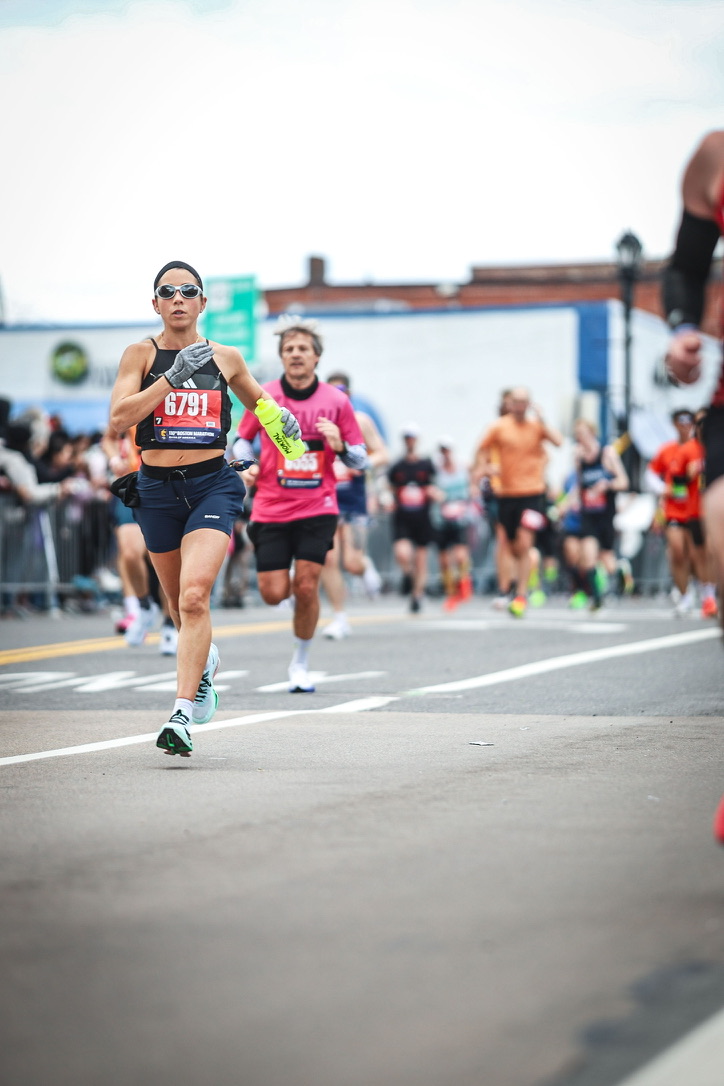
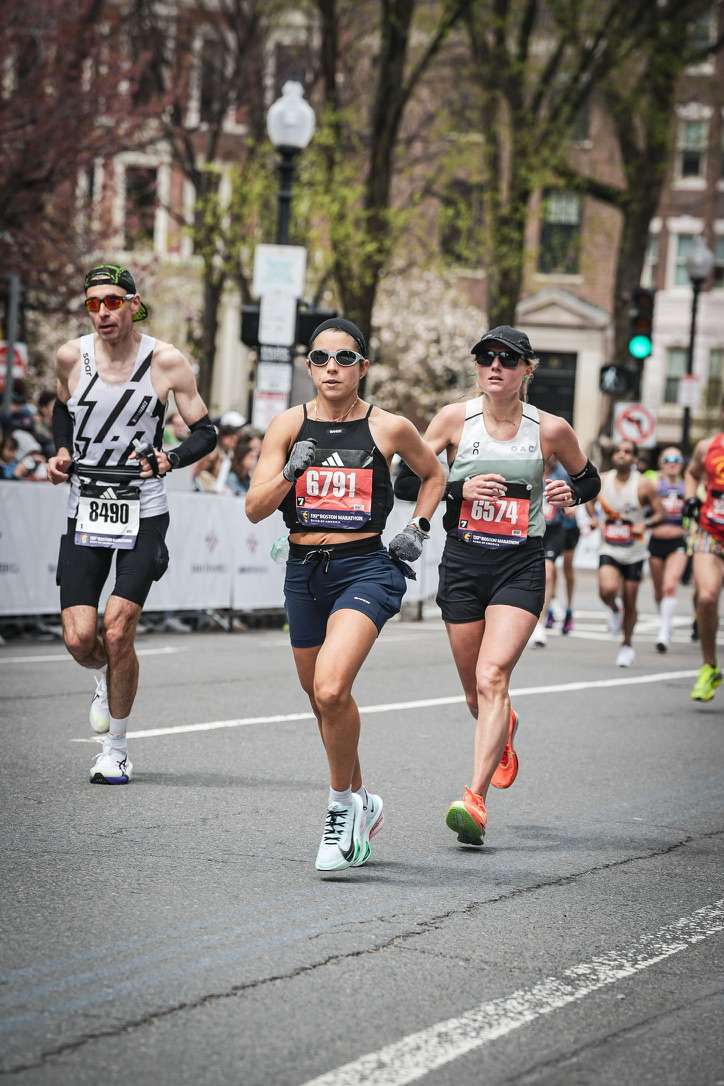
Up until I started the race, my body felt really, really good, and it wasn’t until about half way through mile one that I began cursing myself for not practicing hill training AT ALL and quickly came to the realization (for the third year in a row) that downhill running actually isn’t easy for me when I don’t have access to hills!! Despite feeling incredible pre-race, upon encountering the abrupt downhill that is so characteristic of the first four miles of the Boston Marathon, my legs completely seized up. My quads, from the very beginning, weren’t able to handle the load of running downhill, and my legs went from feeling light and fueled pre-race to suddenly feeling extremely heavy and clunky. As I crossed the first mile marker in about 6:55 in weather MUCH cooler than Florida, and on tapered legs, I wondered how the heck I could EVER have run 6:35 miles in my life! So I quickly decided to shift my goal to try and hit around 6:40 per mile for the first ten miles, but my legs for some reason weren’t feeling it, and I was afraid to exert too much effort in the early miles for fear of blowing up later towards the end of the race. For that first half, I really just tried to keep my cool, go by effort, and enjoy the scenery and the crowds, but my legs were definitely feeling strange with the eccentric load on my quads going downhill.
It was a painful, painful race all around, and I split at the halfway point at around 1:28, which gave me a little bit of hope that I might actually be able to pull off a small PR if I negative split. In fact, I was pretty confident I could negative split: even though my legs felt like lead from mile one, this had allowed me to keep my effort quite low for most of the race, so all I needed to do was continue trudging along and tolerating the bizarre feel of all the downhills that were, for some reason, causing me to slow down rather than speed up.
By the time we got to the Newton Hills, however, the heaviness of my legs quickly became the least of my worries. I had been having a bit of stomach discomfort the entire race, and by the time we got to Mile 17, the too-warm oat milk I had that morning, the extra electrolytes, and the newfound approach I had decided to implement to up my Maurten gels to three per hour (instead of my usual two) resulted in an aggressive and unfortunate need to locate the nearest porta-potty. IMMEDIATELY. As runners, sometimes when that urge comes on mid-race or mid-run, it can sometimes magically resolve itself. In fact, when my stomach started doing backflips near the Newton Fire Station, and I spotted porta-potties up ahead, I decided to skip them, praying that my gut would settle. In the eleven marathons I had completed prior to this year’s Boston, I had NEVER had to stop and use the bathroom during the race. In fact, my rationale for skipping the portapotty and praying this would all go away was rooted in my experience at the 2020 Los Angeles Marathon (my second marathon). At that race, the buses were extraordinarily late to the starting area, and I barely had had time to use the porta-potty before setting off. Around mile three, my stomach urgently communicated that I had made a mistake, and that I would need to locate the nearest porta-potty ASAP unless I wanted to soil myself. The issue with that race was that the porta-potties were so hidden from the course, that even though I desperately wanted and NEEDED to stop, there was literally no bathroom in sight for roughly nine miles. At that point, the feeling had gone away and I was able to finish the race unscathed.
This year’s Boston was a completely different story. After I had passed that Mile 17 bathroom, my stomach laughed and communicated, “you’re going to pay for this.” Suddenly, I realized this was not a 2020 LA Marathon Situation and could easily become my worst nightmare. The undulating hills of Newton didn’t help the situation at all, and now, in addition to my legs mildly burning, my stomach and lungs were on fire as I had to sprint through the toughest section of the course to scan where there could possibly be a bathroom. At this point, I was beyond relying on the course-provided porta-potties. I was scanning every single building I sprinted past to determine what could possibly house an available bathroom for me to duck into. Unfortunately, Newton is an incredibly residential neighborhood, and while there were a few scattered businesses here and there, pretty much everything was closed since the Boston Marathon falls on Patriots’ Day, a state-observed holiday when most businesses close. So, my next best option was to find this magical porta-potty (which I was skeptical of, considering we had just passed one about a half mile ago, and the next one could be literally a mile and a half away), or crash one of the many bougie Newton lawn parties and beg for a civilian to let me enter their home and destroy their powder room.
For the first time during the race, I started to sweat (very nervously), my gait started to change, and I actually thought I was going to have an asthma attack because I was straining so hard to keep everything together. And then, like an oasis in the desert, a singular porta-potty presented itself around Mile 18.
When I finally reached it, I quickly assessed it most definitely was not dedicated to runners, but rather, photographers and volunteers (we were right near the Newton photoshoot around Mile 18 – look at how happy I was after I used the bathroom!).
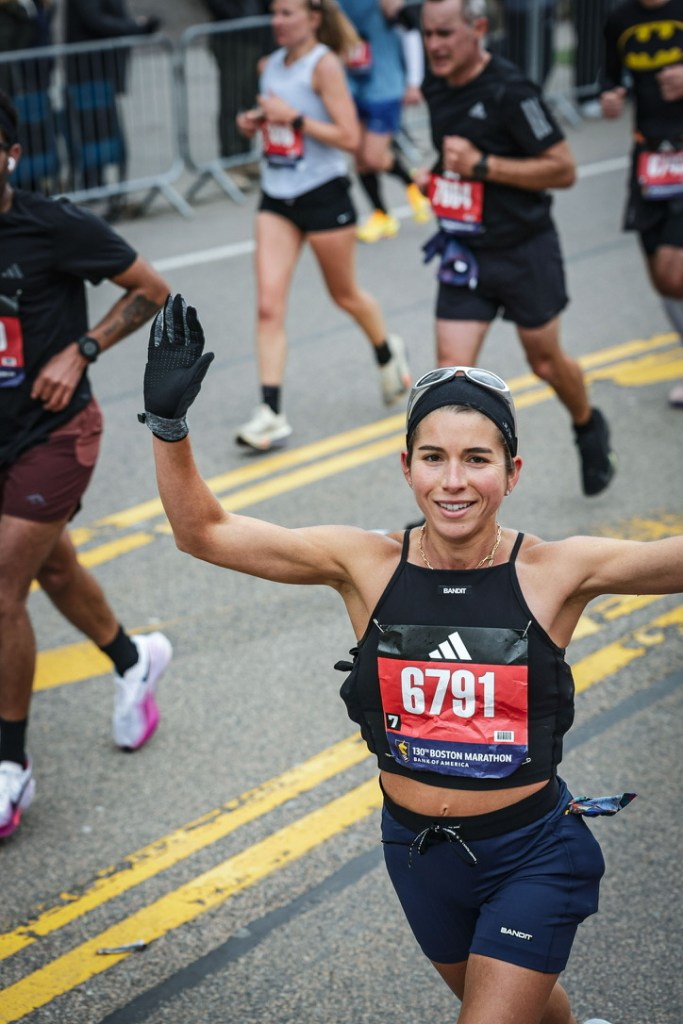
I was so thankful this bathroom appeared so quickly after the one we had just passed, but when I went to go open the door, it was locked. I almost started to cry from the strain of having to wait, and I was worried that after I would sit down on the toilet seat, my legs wouldn’t be able to function to get back up and keep on running. As I waited, I somehow had the wherewithal to split my watch, so I could have some sort of ballpark of how much this bathroom stop would cost me.
Fortunately, the person in the bathroom was extremely quick, and I’m pretty sure all of the volunteers and photographers let me cut them in the bathroom line so I could go (am forever grateful for this!). Unfortunately, I discovered that, despite being in Wave 1, the porta-potty was completely out of toilet paper, so I had to use an abandoned piece of unclean paper I foraged from the corner of the porta-potty. All in all, my glycogen-depleted body was able to miraculously make decisions, assessments, and take action on this little pit stop, costing me in total only about a minute and nine seconds (a bathroom PR for me, not including the waiting!).
After I stopped, I was so much more comfortable running and racing, though my legs still felt quite heavy and dead, but I was able to keep going and run as hard as my legs were capable of on a suboptimal day. The Newton Hills felt challenging since my legs had been hurting so early on in the race, but the bathroom stop almost served as a tiny bit of a break before tackling the worst of the hills. The issue for me, however, is always the downhill instead of the uphill, and this year, it seemed like I struggled with the downhills at the end of the race more than ever before. I tried to keep my effort high and finish strong, but the truth is, after my bathroom stop and my first half being slightly over my goal pace, I knew it would be extremely difficult for me to pull off a PR. After months of training in heat, humidity, and grueling workouts, I just didn’t feel like going all out to probably fall very short of my goal (since the bathroom stop had slowed me down by about a minute and a half total). Thus, at the Newton hills, I decided to reframe my goal from a PR to a Boston PR, and by doing so, I could try to enjoy more of the race, pose for photos, and high-five all the kids and their Power Up signs! All I had to do was get to the sub-3 hour range, and in my glycogen-depleted state, I calculated that if I kept a steady seven-minute mile, I would be able to do that easily.
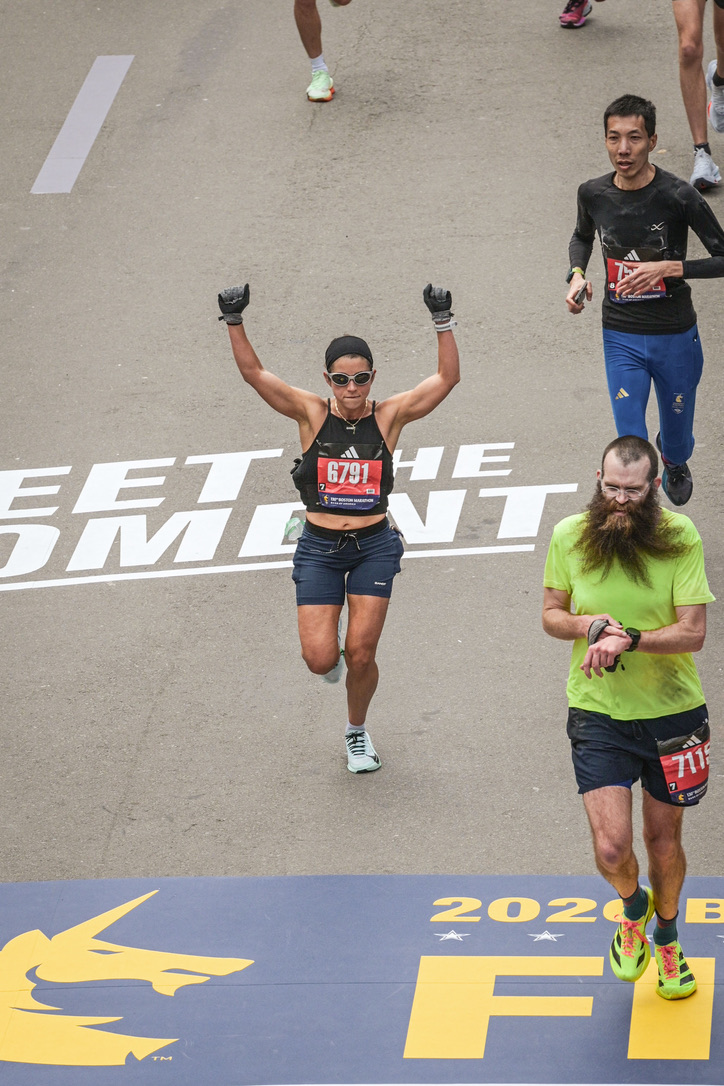
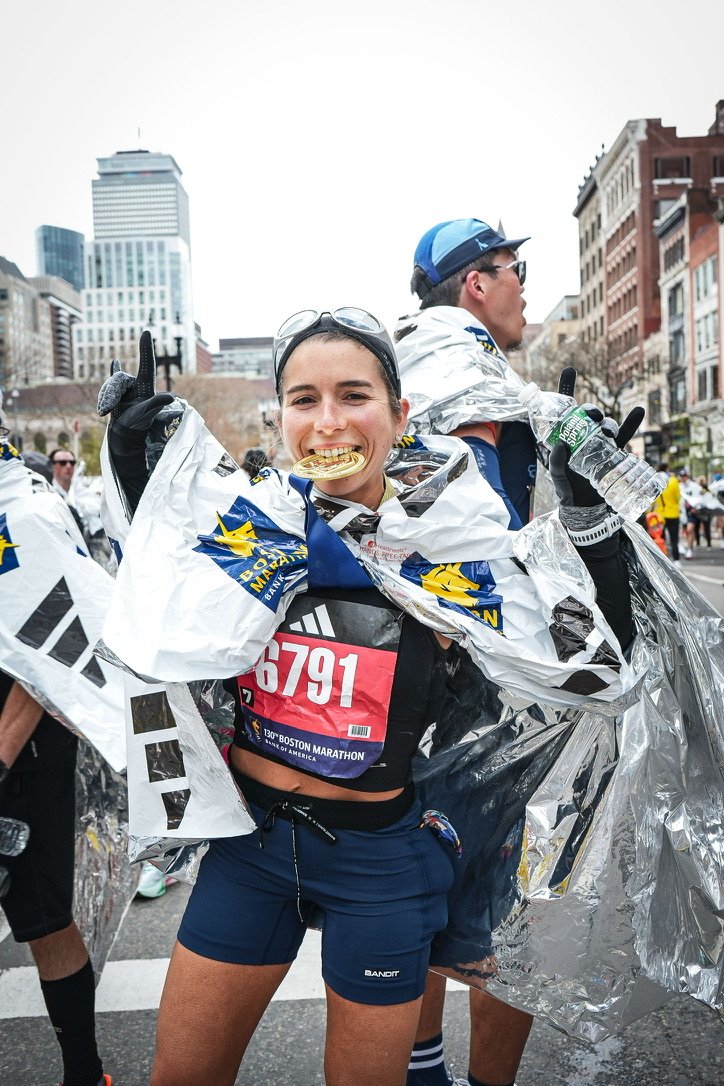
By the time I turned right on Hereford and left on Boylston, I felt strong, but I also didn’t feel like totally gunning it to the finish line. I knew I would be under three hours, and run about a minute faster than the previous year, so I decided to try and get as close as I could to my family spectating on Boylston, and soak in the crowds as I sprinted it in to finish in my new course record of 2:58:23, achieving my fourth sub-3 hour marathon!
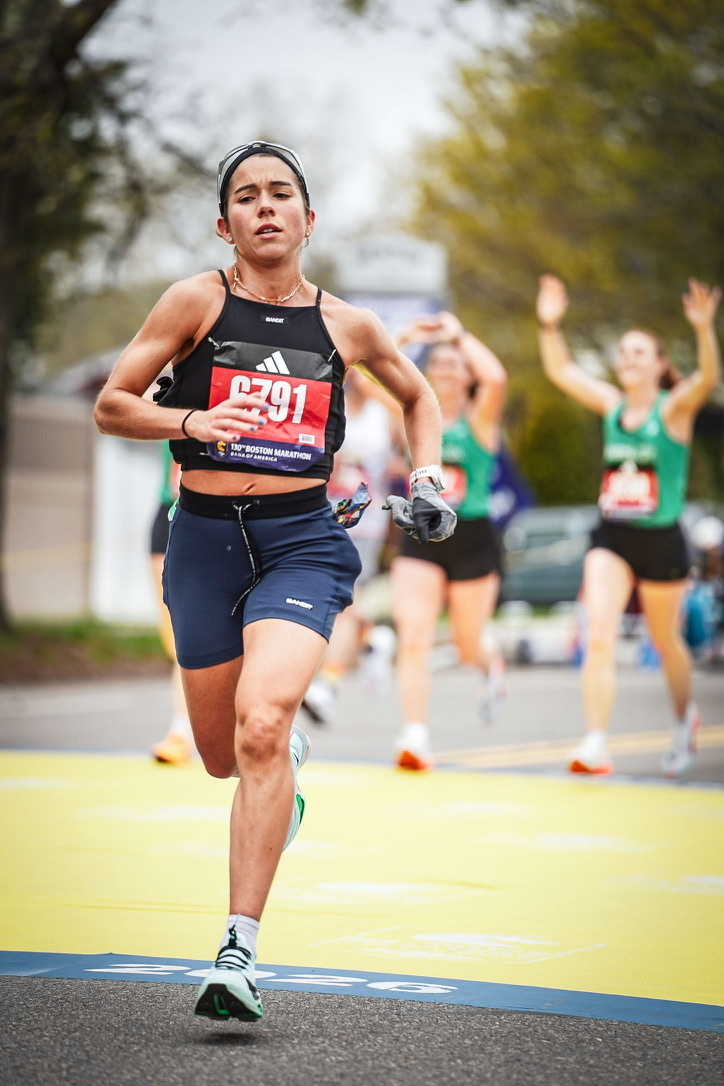
reflections
All in all, I would be lying if I said I weren’t a tiny bit upset about my performance, as I had seriously hoped that I would be closer to the 2:55 range for this race. However, I have to remind myself, that if I hadn’t stopped to use the bathroom, I would’ve been closer to 2:56, and I probably would have had that extra fire in me to give everything I had in the final few miles to get my butt to the finish line as close to PR range as possible. But, I am still proud that I made those course adjustments while I was out there, and that I did end up stopping to use the bathroom. We can’t control everything that happens on race day, which I know is so frustrating when it seems like everyone – from the elites to your running club friends – magically has a spectacular race day in a once-in-a-lifetime Boston weather event, while you just ran meh. That’s how I felt following this year’s Boston, but that’s also why I think it’s so important to love the training and the pursuit of wanting to be a better, happier, and healthier runner than putting all your self-worth on an arbitrary time goal you’ve set for yourself to achieve on an inconvenient day at an inconvenient time in a city you likely had to travel to.
So, while I was a little bummed out about my time, I was still so happy with how I pushed through the race with tired legs, how I still gave Boston a good hard effort after stopping to use the bathroom (a first for me in my twelve marathons!), and how I was able to adjust my goals on the fly and find joy in the experience when I was hurting so much. I’m also incredibly proud of this training block and all that I accomplished, but my experience in Boston left me with a few things I need to work on for my next training cycle.
I will be working on another blog post to outline my lessons and how I plan on shifting both my training and race day procedures in the future, so make sure you subscribe to the blog so you can read that when it comes out next week! Also, if you aren’t subscribed to the YouTube channel, make sure to subscribe here, as I’ll be putting together a Boston race day vlog you won’t want to miss!
And if you also ran the Boston Marathon (or the London Marathon, or any other race!), comment down below how it went and anything else you’d like to chat about or want me to write about. Congratulations for being a runner, committing to improving your mental and physical health, and for making it to the end of this mini-marathon blog post! Thank you for being here ❤


Leave a Reply